From Skeuomorphism to Neumorphism
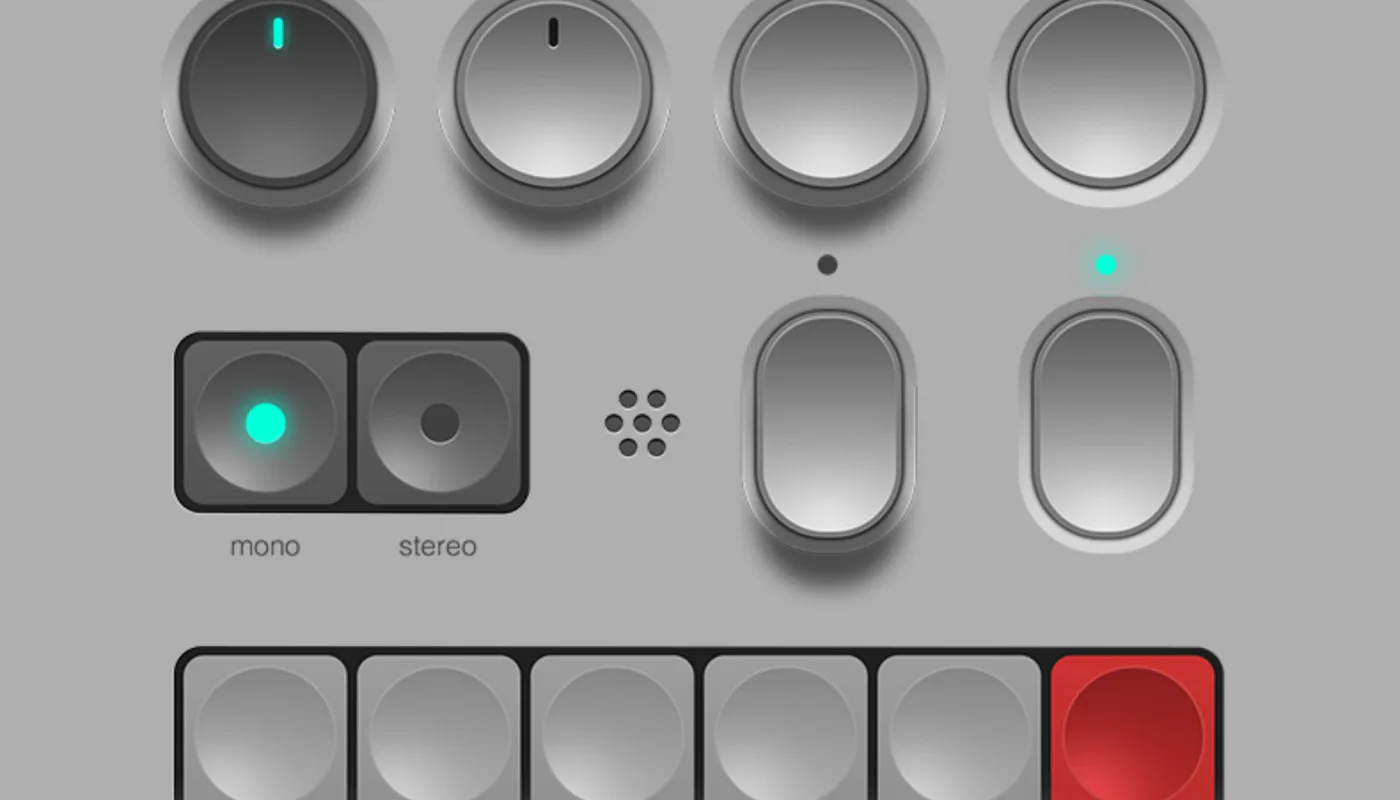
Design is about how things look, sure, but it's also about how they feel, how they guide us, and how they change alongside the technology underneath. You can see that clearly in the history of user interface design. Over the past few decades the visual language of UI has shifted again and again, each time in response to changes in technology, culture, and what people expected from their screens. Here's a timeline, from the detailed textures of skeuomorphism to the soft minimalism of neumorphism, with what each style taught us and a guess at where things go next.
1. Skeuomorphism (1990s to early 2010s): the age of realism
When personal computers and smartphones first went mainstream, designers had a problem to solve: how do you make a digital interface feel familiar? Skeuomorphism was the answer. It copied real objects. Buttons looked like you could press them, notepads had leather stitching, and calculators looked like their physical counterparts.
What it taught us is that familiarity lowers the learning curve. People knew how to use an app right away because it looked like the thing it stood in for. But as devices and their users matured, all that ornament started to feel cluttered and dated.
2. Flat design (2010s): digital minimalism
The release of iOS 7 and Microsoft's Metro design language brought in the flat design era. Textures and shadows went away, and bold color, clean typography, and sharp geometric shapes took their place. Interfaces got lighter and faster, and they were easy to scale across screen sizes.
Flat design was a breath of fresh air, and it put clarity and efficiency first. It also exposed a real downside: sometimes people couldn't tell what was interactive and what wasn't, and that caused usability problems.
3. Material Design (2014 to present): depth with a purpose
Google introduced Material Design as a middle ground. It kept flat design's simplicity but brought back subtle shadows, layers, and motion to create hierarchy and focus. Its "digital paper" environment balanced looks with usability, and it's become one of the most influential design systems so far.
The lesson from Material is that motion and depth can do real work. They guide people's attention and make feedback clearer, which is a lot more than decoration.
4. Neumorphism (2019 to present): soft UI
Neumorphism (sometimes called "new skeuomorphism") is a more recent trend. It mixes flat design with soft, extruded elements: pastel palettes, gentle shadows, and objects that look embossed or pressed into the screen. The effect is tactile, like you could reach out and touch it.
It's visually striking, and it also raised accessibility concerns. Low contrast can make an interface hard to read, and too many soft shadows blur the hierarchy. I'll give it this, though: it got designers thinking about physicality in digital space again.
5. What's next: beyond aesthetics
Interface design has gone from realism to minimalism and from depth to softness, and each shift reflected both cultural taste and what the technology made possible. My guess is that the next era of UI won't be defined by aesthetics alone, but by context:
- Adaptive interfaces, personalized experiences that adjust in real time.
- Voice and gesture UI, interfaces that move beyond the screen entirely.
- Spatial design, where AR and VR put UI elements in three-dimensional space and blend digital with physical environments.
- Ethical and inclusive design, where accessibility, inclusivity, and sustainability drive decisions as much as style does.
Final thoughts
What strikes me looking back over these trends is that design keeps responding. Each style showed up as an answer to what users needed and what the technology could do. Skeuomorphism taught us familiarity, flat design pushed clarity, Material balanced form and function, and neumorphism brought tactility back.
Going forward, I think the question is less about how our interfaces look and more about how they adapt, respond, and respect the people who use them. That's the part I'm most curious to watch.